


Players making better players.
Rally is a mobile app designed to support recreational adult athletes by driving skill development through peer recognition and creating connections through shared competitive interests.
Role: UX researcher & UI designer
timeline: 7 months
responsibilities: Research → synthesis → design → testing → branding → handoff
Tools: figma, loom, visual electric, claude

The cultural shift:
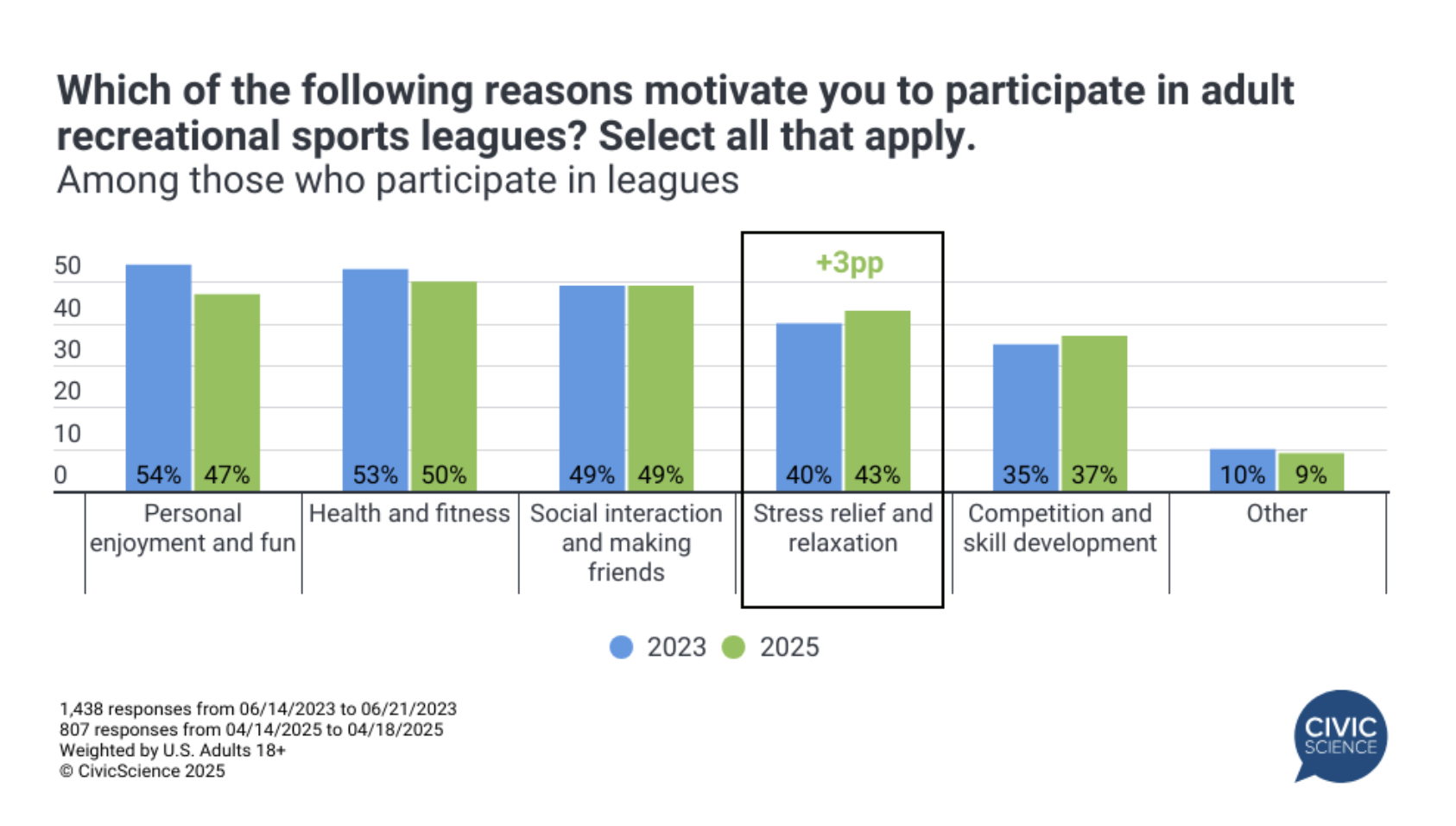
rec sports are becoming more competitive & technical.
increasing motivation towards competition & skill development.

The main issue:
Recreational sports bring in players from widely different skill levels.
as skill development becomes a priority, the gap between players doesn’t just exist. it becomes harder to cross.
the players:
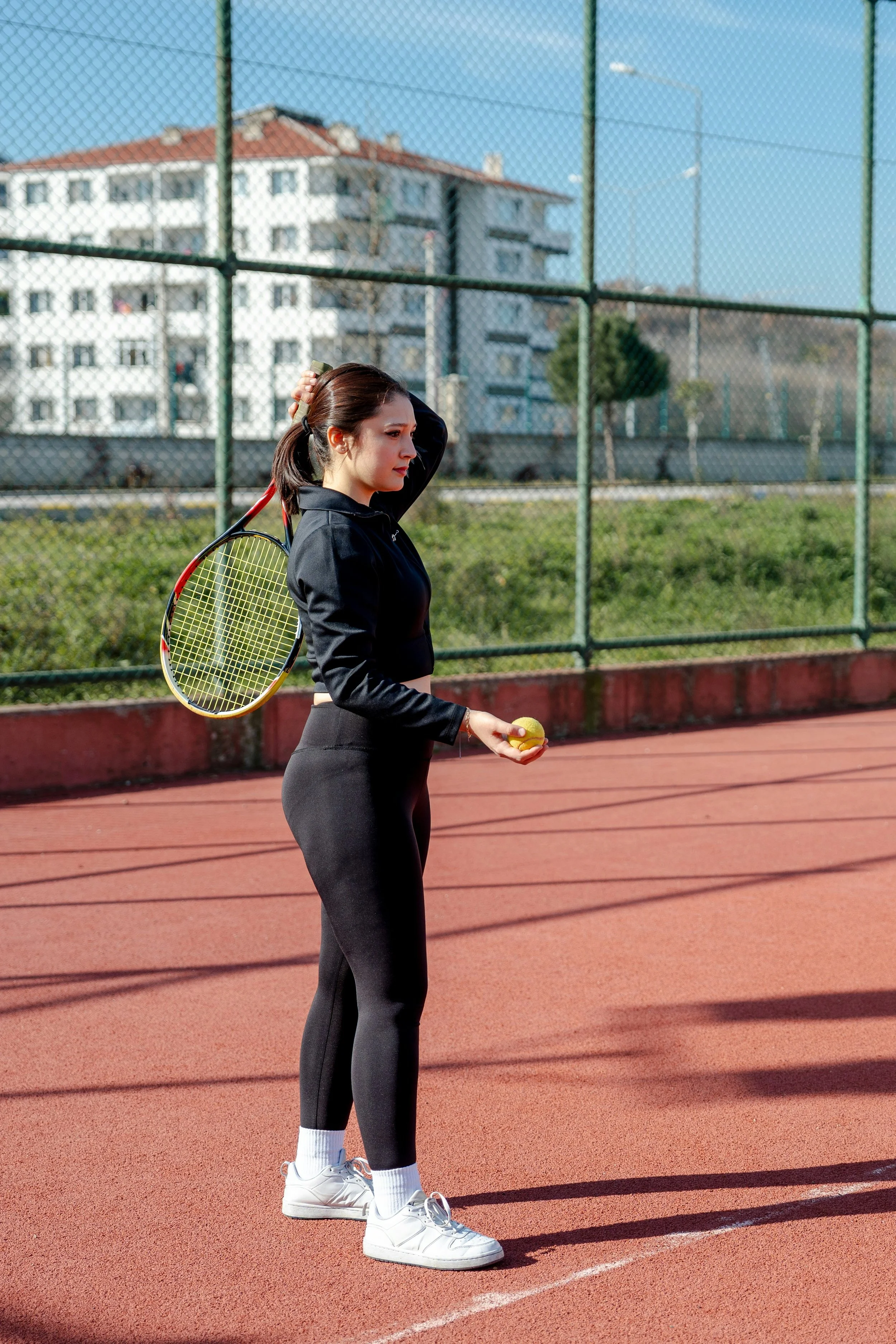
the lower-level players
‘open play’ regular
New to/re-engaging with a sport
lacking technical skills
middle school level
key challenges:
players want to progress in skill, but there’s no easy way to find help
affordability is a major factor for adult athletes seeking lessons
current social options don’t promote local opportunities
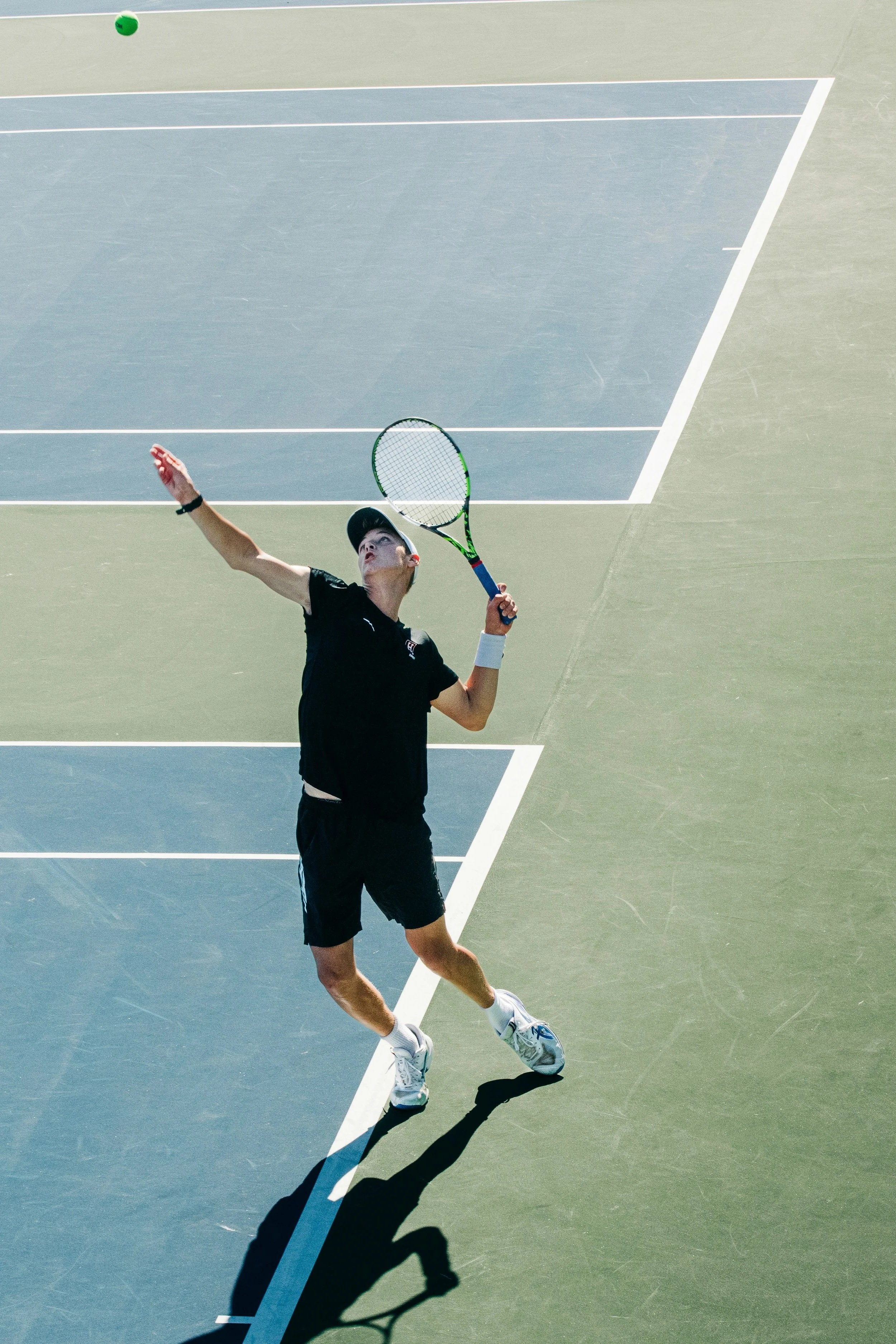
the higher-level players
plays tournaments, club, competitive leagues
deeply familiar with sport
developed technical skills
varsity high school, collegiate level
key challenges:
unwilling to help unless given financial incentives.

The initial Hypothesis:
How can rec athletes successfully discover affordable opportunities, in order to overcome skill plateaus and progress to higher levels of play?
key research findings:
user interviews revealed 3 insights that challenged initial assumptions:
-
Players take a step before seeking any coaching or support. They seek confirmation from their peers. “Progress” is defined through external indicators:
Tournaments
League Divisions
Invitations initiated from more-experienced players
to better understand where they stand.
“I value having other people’s opinions and rankings…[it gives you] awareness of where you fall.” - Kelby J.
-
While cost matters, a stronger motivator is:
whether a player believes they can meaningfully impact the game
Less-experienced players seek coaching when they see clear, applicable improvement
Motivation increases with perceived potential
-
More experienced players are willing to help but only if:
time commitment and social investment is low and easy
it doesn’t interfere with their own rec experience
they know their advice will be impactful
“You don’t want to come across as a know-it-all… it’s a question mark whether you step over that boundary.” - Justin H.
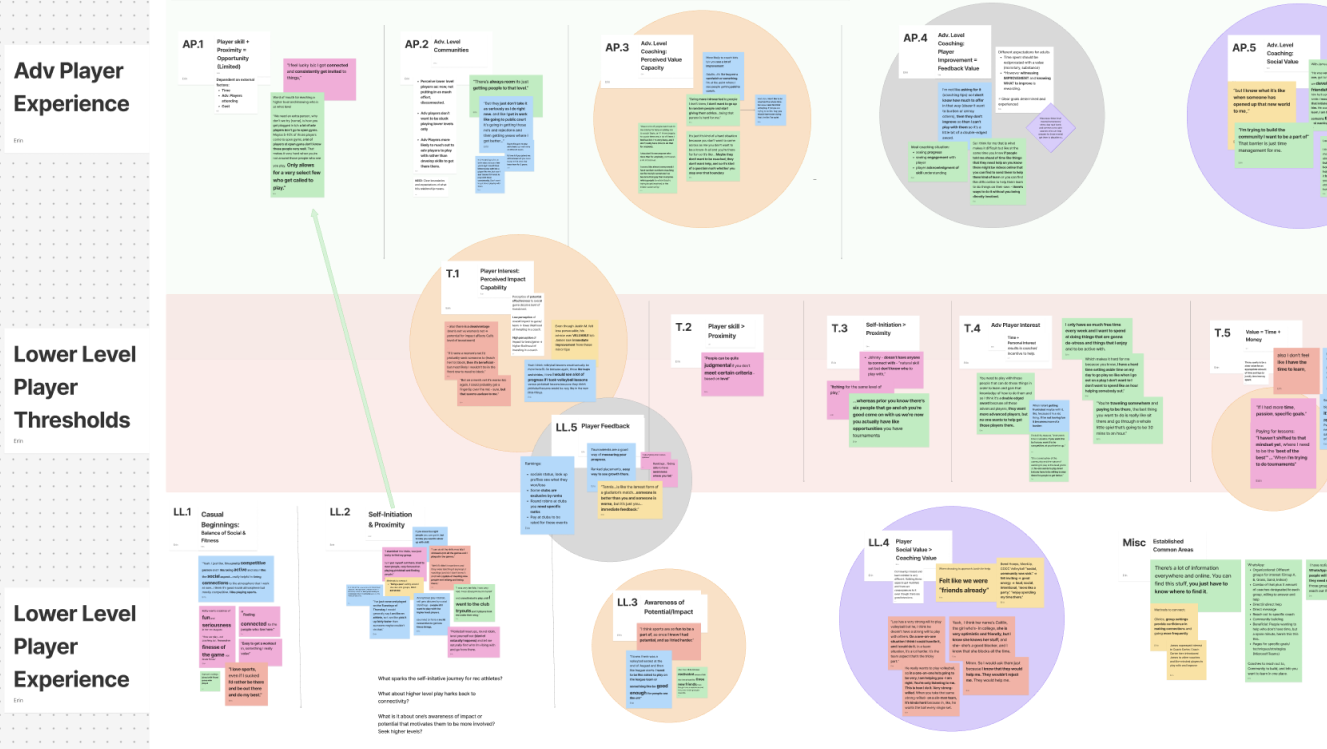
mapping patterns from user interviews
defining the users:
specifying scenarios into personas
*Persona visuals generated to represent behavioral archetypes based on interview synthesis.

ambitious newcomer
Beginner–Intermediate
motivated to improve quickly
Needs targeted, actionable feedback to improve
seeks access to higher-level competition
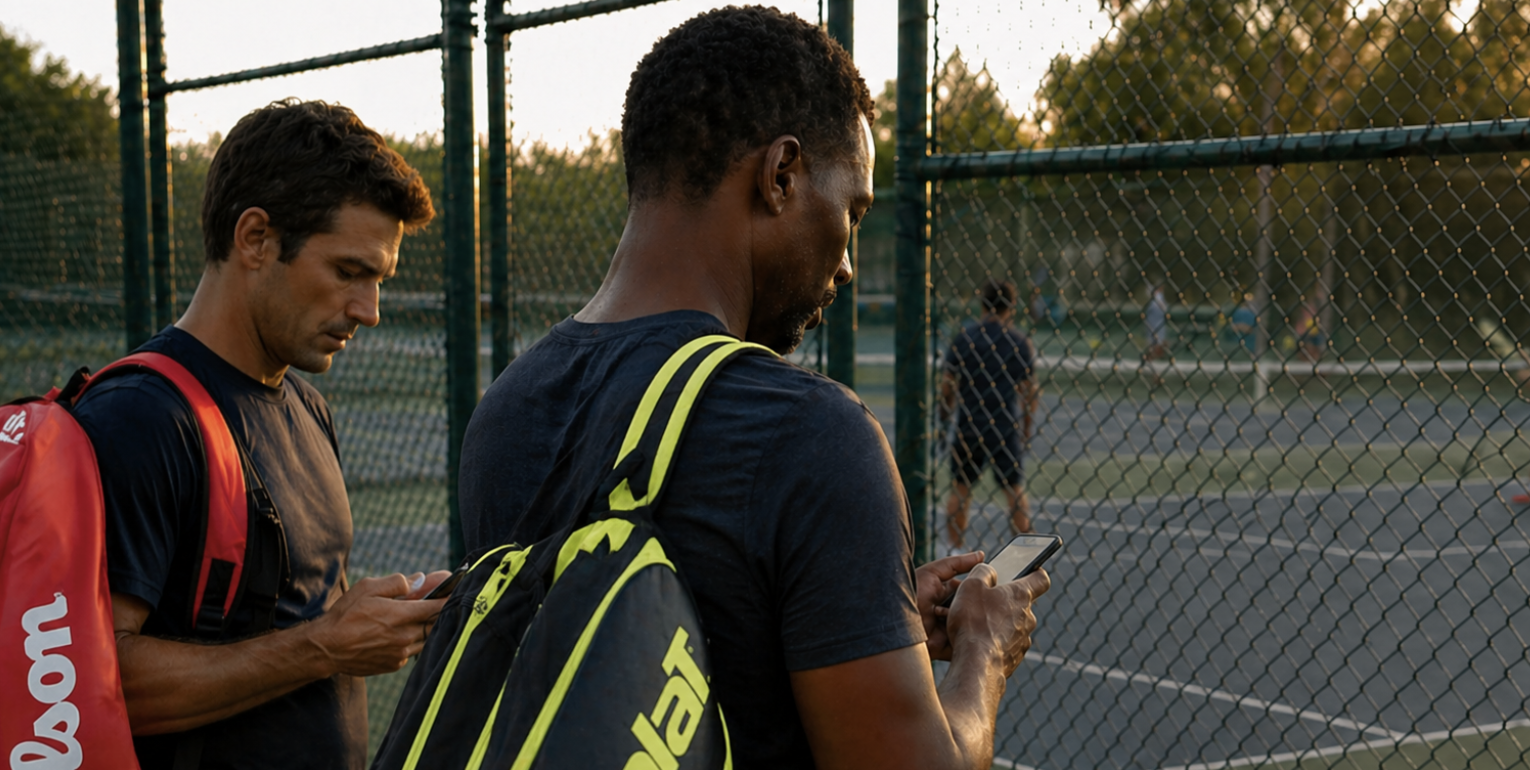
selective competitor
Advanced–competitive levels
desires a stronger competitive pool
avoids low-skill environments
open to helping others - if buy-in is low committment

the real user gap:
why the gap exists
ambitious newcomers →
lack visibility into higher-level networks without an invitation.
“I want to be asked to play on a league team or be good enough for people to be like, ‘Oh! Her!’” - atira f.
Selective competitors →
Avoid open play due to inconsistent skill levels.
“A lot of advanced players don’t go to open gyms…, It only allows for a very select few who get called to play up.” - Justin H.
key insight:
This wasn’t a training problem.
It was a matchmaking problem.

revised approach:
How might we create low commitment, high-value interactions between less and more experienced players through peer feedback + clear goals + shared competitive interest?
from insight to product
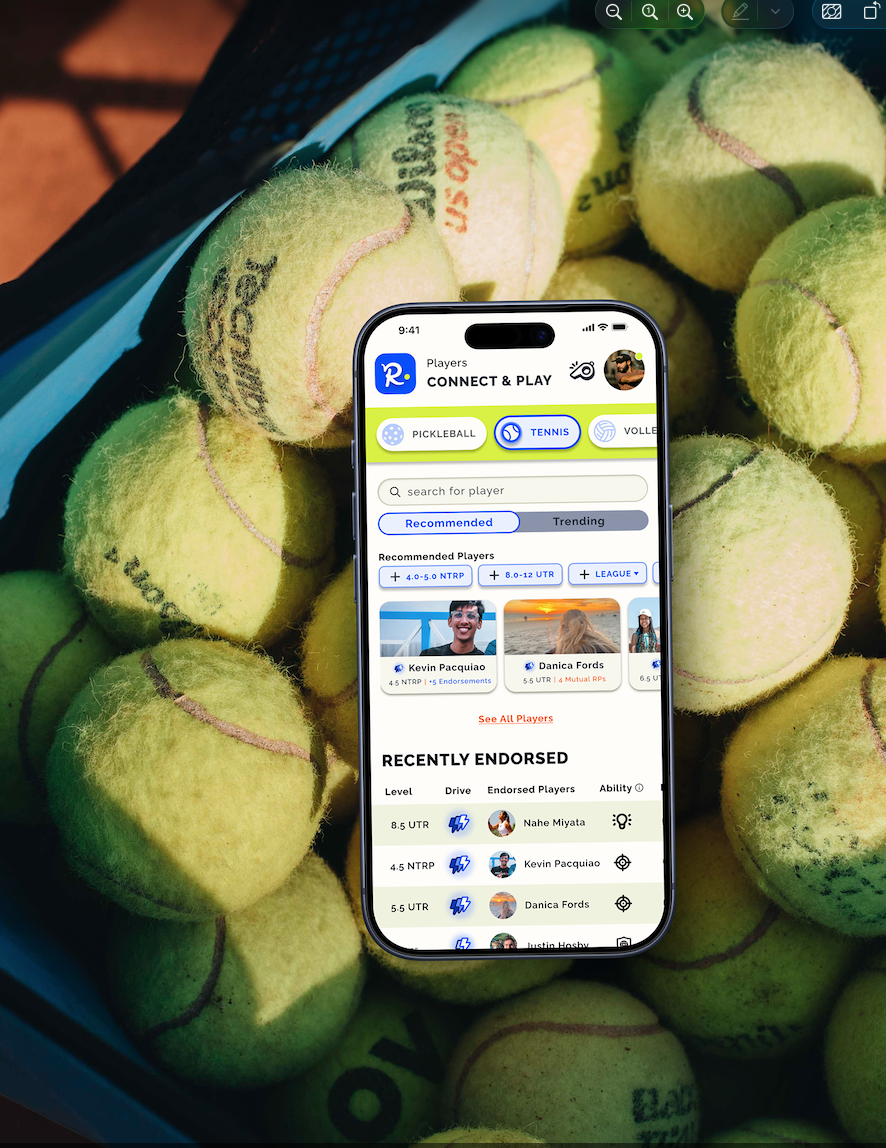
introducing rally
A mobile platform that helps emerging players earn access to stronger competition through feedback, reputation, and shared goals.
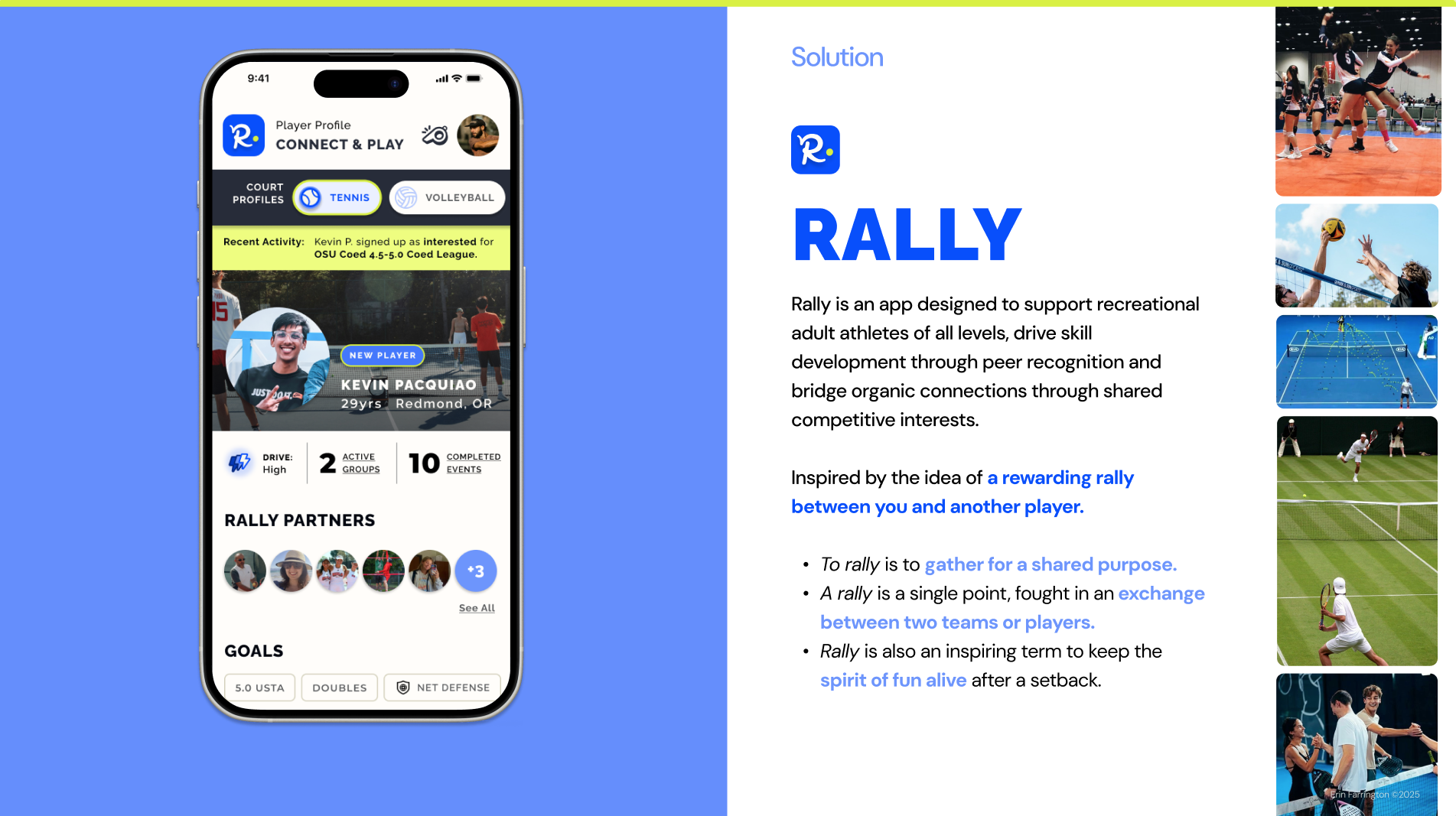
1. discover local players
See who’s available for daily play, special event preparation, and potential teammates.
2. Build trust & Credibility
Earn endorsements, see trusted partner connections.
3. Unlock a wider network
Use filters and reputation signals to access a stronger and wider pool of competition.
how rally works
early user validation
80% of tested users
found Rally faster and easier for making player connections than Meetup, WhatsApp, or Facebook.
traditional open play:
random skill levels
no visibility to growth
hard to break into social networks
stronger players avoid lower level play
with rally:
targeted matchmaking
credibility signals
clear upward paths
low-friction contribution
EARLY SIGNALS SUGGESTED STRONGER MATCH QUALITY, LOWER COORDINATION FRICTION, AND BETTER NETWORK ACCESS.
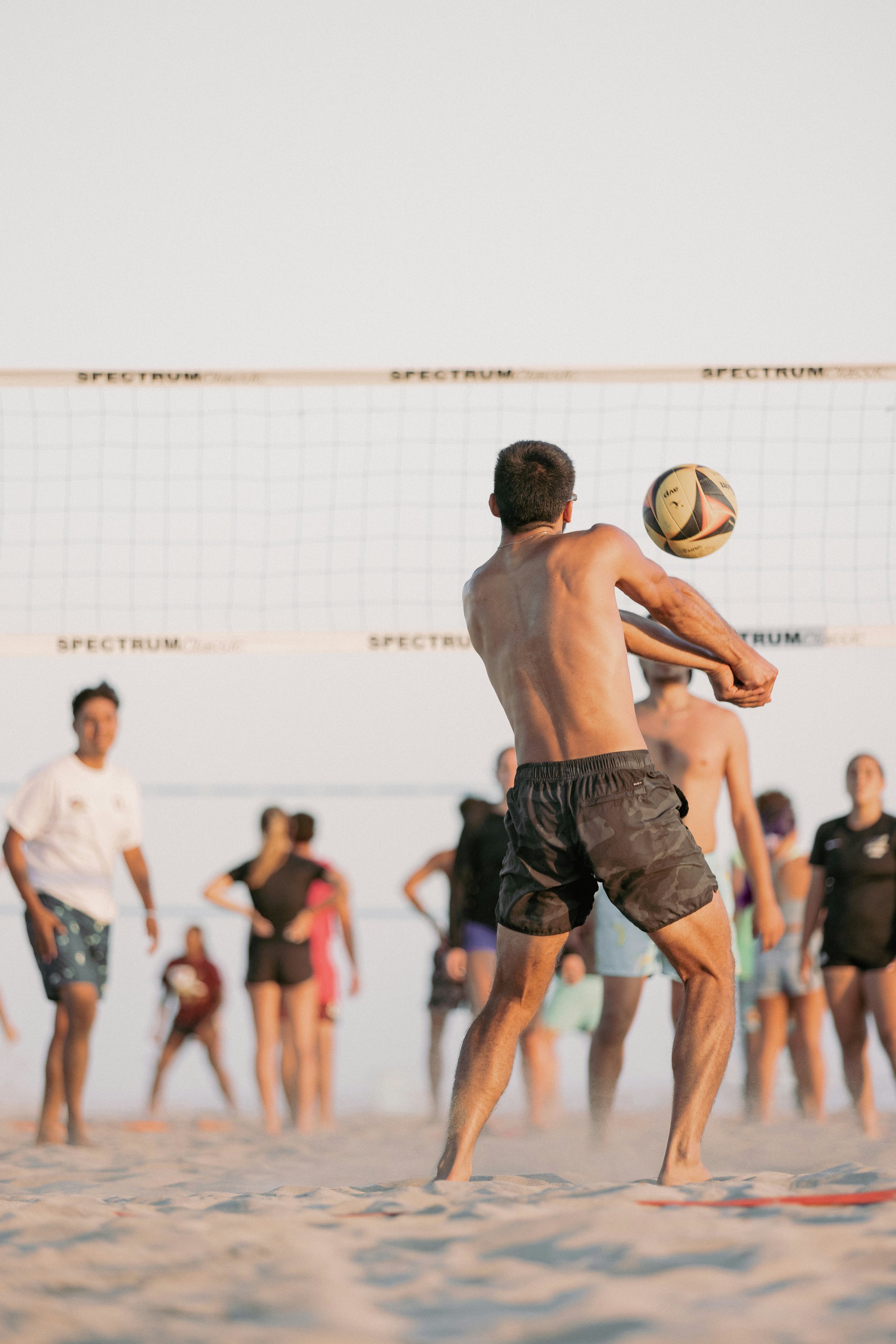
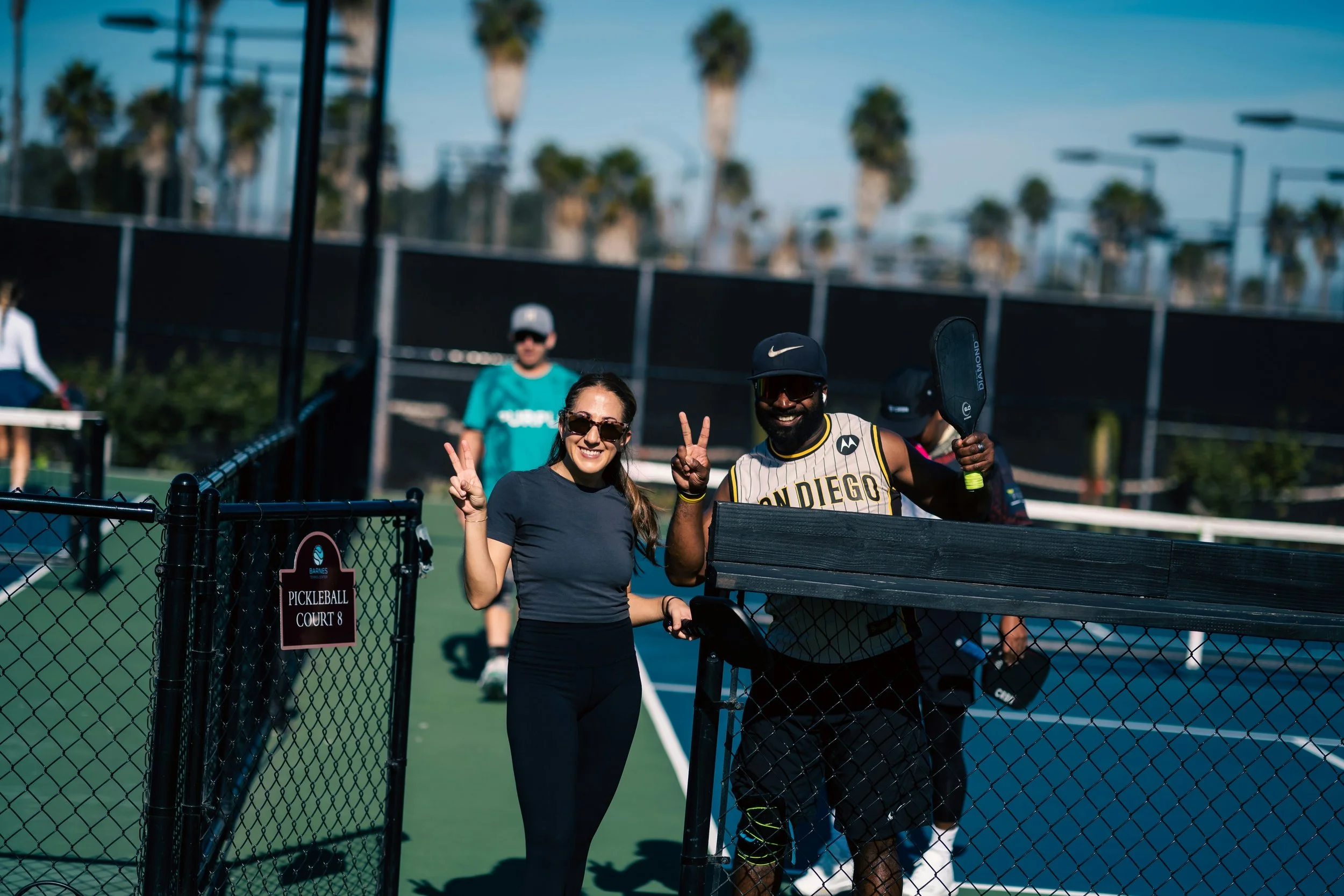
“THIS GIVES YOU A CLEAR IDEA OF WHERE THEIR LEVEL IS AT. you have feedback.”
Beginner–Intermediate Volleyball Player
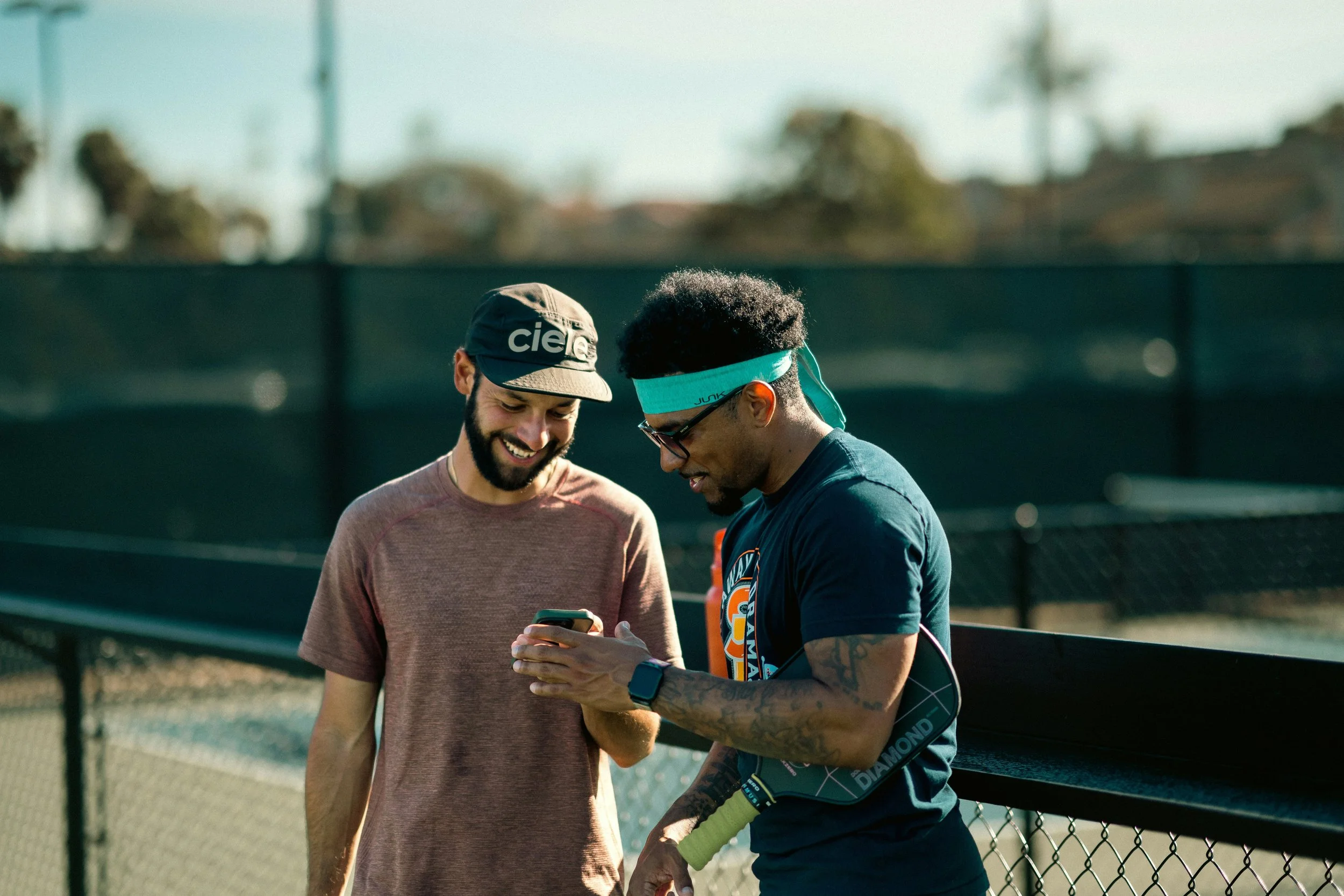
“I’D BE PLAYING A LOT MORE AND IT’D BE EASIER TO ORGANIZE.”
Advanced Volleyball + Tennis Player
“it’s plug and play. It would be easier to meet up with people.”
Multi-sport Recreational Player
next steps I’d test:
which filters improve growth quality
whether “easier coordination” actually increases repeat player connections?
which trust signals matter most in social community formats?
KEY takeaways
the challenge wasn’t creating access; it was creating value.
RALLY REFRAMED An access/progression PROBLEM AS A trust/value PROBLEM —
HELPING AMBITIOUS NEWCOMERS EARN credibility, WHILE GIVING EXPERIENCED PLAYERS impactful ways TO ENGAGE.